


Intermediate Pianists:
Take Your Piano Reading Skills to the Next Level
Break through barriers, tackle more challenging pieces, and unlock the joy of fluent piano reading.

Develop your skills with real sheet music ...
Piano Reading SELECT is the measure-by-measure approach to learning real piano literature. Refine and deepen your skills with intermediate classical repertoire as the next part of your journey in piano literacy.
In this membership you will ...
- Master the mechanics for playing the whole keyboard with confidence and ease.
- Build layers of literacy that will improve all parts of your musicianship.
- Identify and lean into your innate musical strengths and use them in your note-reading.
- Creatively apply frameworks that always result in accurate, fast learning.
- Strengthen your visual, tactile, and aural skills to maximize your sight reading.
Intermediate Pianists:
Take Your Piano Reading Skills to the Next Level
Break through barriers, tackle more challenging pieces, and unlock the joy of fluent piano reading.
Develop your skills with real sheet music ...
Piano Reading SELECT is the measure-by-measure approach to learning real piano literature. Refine and deepen your skills with intermediate classical repertoire as the next part of your journey in piano literacy.
In this membership you will ...
- Master the mechanics for playing the whole keyboard with confidence and ease.
- Build layers of literacy that will improve all parts of your musicianship.
- Identify and lean into your innate musical strengths and use them in your note-reading.
- Creatively apply frameworks that always result in accurate, fast learning.
- Strengthen your visual, tactile, and aural skills to maximize your sight reading.
Piano Reading Select
$27 per month.
No additional fees.
Cancel anytime from your account center or email.
Member Benefits
The Measure by Measure Repertoire Library
Your membership gets you access to the growing list of repertoire for intermediate players and the in-depth lessons for the pieces.
Real-world demonstrations for every measure of music ensure that you know exactly how to read, practice, and express every phrase of music.
Included in the Measure by Measure Library

Masterpiece Collection
The most accessible music of the master composers that everyone wants to play. The measure by measure approach makes these most familiar pieces easy to tackle.
Download special engravings of the sheet music optimized for the learning process (it’s bigger and clearer for fingerings)

Unsung Heroes Collection
Learn from the forgotten geniuses of the classical composers. Composers like
- Stephen Heller
- Louis Diémer
- Muzio Clementi
- Friedrich Burgmüller
- Xaver Scharwenka
and many more!

Guide to Sheet Music Resources
How to pick a piece for the next step in your journey.
Recommended books, series, and databases.
Granular analysis of the level of difficulty for each piece, so you know what skills are required before starting a new piece.
Sight Reading Secrets
The backbone frameworks for our approach are found in Sight Reading Secrets.
Discover the principles and tactics proficient readers use to know what to do with their hands, their eyes, and their ears, when reading sheet music.
These principles will make or break how you enjoy the sheet-music experience at the piano.
Subscription Details:
$27 per month. You can cancel any time.
Or $20 / month (billed annually $260), and you will also get SELECT Techniques
Piano Reading SELECT is Perfect for ...
Beginners ready for more
You will begin by learning the 6 main mechanics of intermediate music and how to practice them. Then you will build your literacy, technique, and confidence at the piano through the study of specially-selected repertoire, with a suggested order of learning so that you can enjoy frequent wins and celebrate your successes.
Intermediate Piano Readers who want to improve their literacy
If you've been playing for a while now, you're likely noticing the bottleneck of sheet music. While others will tell you to play "another way", I'm here to tell you that the only way out is through. Don't worry - that journey is full of amazing and beautiful things to learn, create, and explore.
Long-time players who want more from their online music making
If you've learned through lessons in the past, you'll notice a stark difference in most online piano approaches - they never talk about sheet music. Your lessons were likely much different. Piano Reading Select will feel like a familiar approach, with the advantage of on-demand video demonstrations and all the benefits of a catalogue of beautiful music specifically selected for developing piano proficiency.
Meet Your Teacher
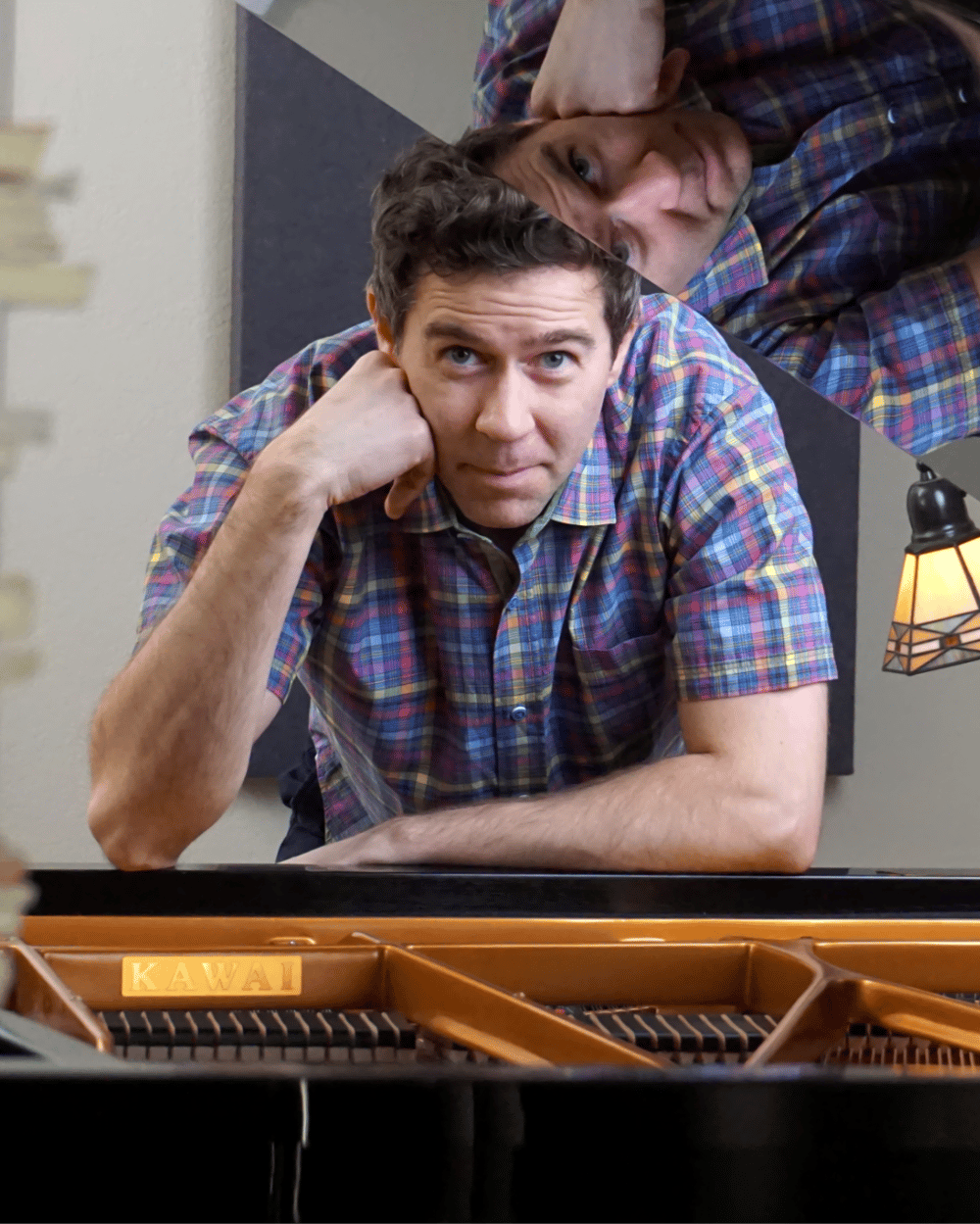
Randy Peck is a pianist, teacher, and songwriter. He has taught professionally for over 17 years and has a passion for lifting the lid on the learning process and exposing the flaws of old-method axioms. His approach to "Creative Literacy" is centered on the belief that music literacy is always an advantage. Sheet music is not just useful - it is a launching pad for progress, fun, and creativity at the piano.
With the aid of sheet music.
As a late-beginner or intermediate pianists, you have recognized your need to be creative and you’d love to be …
More confident at the piano
More expressive with balance and dynamics
More proficient with sheet music
More capable of improvising or playing by ear
More in control and More FREE
Stand Out! Play Real Music
The truth is that most pianists with those skills developed them in private lessons with a proficient teacher.
What happens in a piano lesson?
Honestly, the majority of the time is spent refining and polishing “repertoire”.
Pieces of music specifically written for piano.
What happens through that deep study is a holistic growth of all the elements that make a musician - ear development, technique, literacy, expression, memory, performance …
No shortcuts are needed when the journey is the fun part.
Any course that promises a shortcut is going to feel more like a bad haircut than a new outfit that makes you feel like a million bucks.
It’s a little insulting to be promised musical instructions and to be handed a cowbell.
The emphasis in Piano Reading SELECT is to demonstrate the principles and mechanics of playing piano in the context of music that best showcases those mechanics.
That makes practicing interesting, expressive, creative, AND effective.
Ultra-rare principles-based approach to learning piano ...
In Piano Reading SELECT, we apply the principles of literacy instead of just showing you the keys to play.
Demonstration, modeling, and reflection of what skills are needed and how they are physically done on the piano, connecting technique, literacy, and repertoire into a single framework.
Competency + Creativity = Literacy
It is a simple concept, but one that isn’t explicitly taught very often. What to do with your eyes - how to LOOK at the sheet music for better comprehension.
People that read well PLAY with their music. They improvise, they steal ideas, they feel the keyboard with more trust, and they see the big picture while simultaneously observing interesting small details. In essence, they are creative with their learning.
And there isn’t one musical talent that sets them apart. Some are good at playing by ear, some have excellent technique, some are visual learners. In Piano Reading Select, you'll learn your musical strength and how to put it to work in your own playing.
Piano Reading Select
$27 per month.
No additional fees.
Cancel anytime from your account center or email.
Member Benefits
The Measure by Measure Repertoire Library
Your membership gets you access to the growing list of repertoire for intermediate players and the in-depth lessons for the pieces.
Real-world demonstrations for every measure of music ensure that you know exactly how to read, practice, and express every phrase of music.
Included in the Measure by Measure Library
Masterpiece Collection
The most accessible music of the master composers that everyone wants to play. The measure by measure approach makes these most familiar pieces easy to tackle.
Download special engravings of the sheet music optimized for the learning process (it’s bigger and clearer for fingerings)
Unsung Heroes Collection
Learn from the forgotten geniuses of the classical composers. Composers like
- Stephen Heller
- Louis Diémer
- Muzio Clementi
- Friedrich Burgmüller
- Xaver Scharwenka
and many more!
Guide to Sheet Music Resources
How to pick a piece for the next step in your journey.
Recommended books, series, and databases.
Granular analysis of the level of difficulty for each piece, so you know what skills are required before starting a new piece.
Sight Reading Secrets
The backbone frameworks for our approach are found in Sight Reading Secrets.
Discover the principles and tactics proficient readers use to know what to do with their hands, their eyes, and their ears, when reading sheet music.
These principles will make or break how you enjoy the sheet-music experience at the piano.
Subscription Details:
$27 per month. You can cancel any time.
Or $20 / month (billed annually), and you will also get SELECT Techniques
Piano Reading SELECT is Perfect for ...
Beginners ready for more
You will begin by learning the 6 main mechanics of intermediate music and how to practice them. Then you will build your literacy, technique, and confidence at the piano through the study of specially-selected repertoire, with a suggested order of learning so that you can enjoy frequent wins and celebrate your successes.
Intermediate Piano Readers who want to improve their literacy
If you've been playing for a while now, you're likely noticing the bottleneck of sheet music. While others will tell you to play "another way", I'm here to tell you that the only way out is through. Don't worry - that journey is full of amazing and beautiful things to learn, create, and explore.
Long-time players who want more from their online music making
If you've learned through lessons in the past, you'll notice a stark difference in most online piano approaches - they never talk about sheet music. Your lessons were likely much different. Piano Reading Select will feel like a familiar approach, with the advantage of on-demand video demonstrations and all the benefits of a catalogue of beautiful music specifically selected for developing piano proficiency.
Meet Your Teacher
Randy Peck is a pianist, teacher, and songwriter. He has taught professionally for over 17 years and has a passion for lifting the lid on the learning process and exposing the flaws of old-method axioms. His approach to "Creative Literacy" is centered on the belief that music literacy is always an advantage. Sheet music is not just useful - it is a launching pad for progress, fun, and creativity at the piano.
With the aid of sheet music.
As a late-beginner or intermediate pianists, you have recognized your need to be creative and you’d love to be …
More confident at the piano
More expressive with balance and dynamics
More proficient with sheet music
More capable of improvising or playing by ear
More in control and More FREE
Stand Out! Play Real Music
The truth is that most pianists with those skills developed them in private lessons with a proficient teacher.
What happens in a piano lesson?
Honestly, the majority of the time is spent refining and polishing “repertoire”.
Pieces of music specifically written for piano.
What happens through that deep study is a holistic growth of all the elements that make a musician - ear development, technique, literacy, expression, memory, performance …
No shortcuts are needed when the journey is the fun part.
Any course that promises a shortcut is going to feel more like a bad haircut than a new outfit that makes you feel like a million bucks.
It’s a little insulting to be promised musical instructions and to be handed a cowbell.
The emphasis in Piano Reading SELECT is to demonstrate the principles and mechanics of playing piano in the context of music that best showcases those mechanics.
That makes practicing interesting, expressive, creative, AND effective.
Ultra-rare principles-based approach to learning piano ...
In Piano Reading SELECT, we apply the principles of literacy instead of just showing you the keys to play.
Demonstration, modeling, and reflection of what skills are needed and how they are physically done on the piano, connecting technique, literacy, and repertoire into a single framework.
Competency + Creativity = Literacy
It is a simple concept, but one that isn’t explicitly taught very often. What to do with your eyes - how to LOOK at the sheet music for better comprehension.
People that read well PLAY with their music. They improvise, they steal ideas, they feel the keyboard with more trust, and they see the big picture while simultaneously observing interesting small details. In essence, they are creative with their learning.
And there isn’t one musical talent that sets them apart. Some are good at playing by ear, some have excellent technique, some are visual learners. In Piano Reading Select, you'll learn your musical strength and how to put it to work in your own playing.