Want to Try a Measure by Measure Lesson FREE?
Get "How To Read Music - Quick!"

Where Can I Send Your First Lesson?
NOTE FROM RANDY: Check the box above to receive a free lesson from Measure by Measure and join my email newsletter. You can unsubscribe at any time, and I will never share your information with anyone.
Do you prefer to learn real piano pieces over stepping through hoops, playing boring exercises or infantilizing method books?
Play Real Music
Build Real Piano Skills
How pianists that have struggled for years with sheet music are finally getting the “aha” moments that make sheet music a joy!
And how beginners unlock their music literacy so sheet music is a non-issue from the start ...
Join Measure by Measure and transform your relationship with sheet music and piano forever!
FREE Sign-Up Bonus!
Need to Learn Scales?
Let’s make that easy.
Join "Measure by Measure" Today and Get
"The Scales Solution"
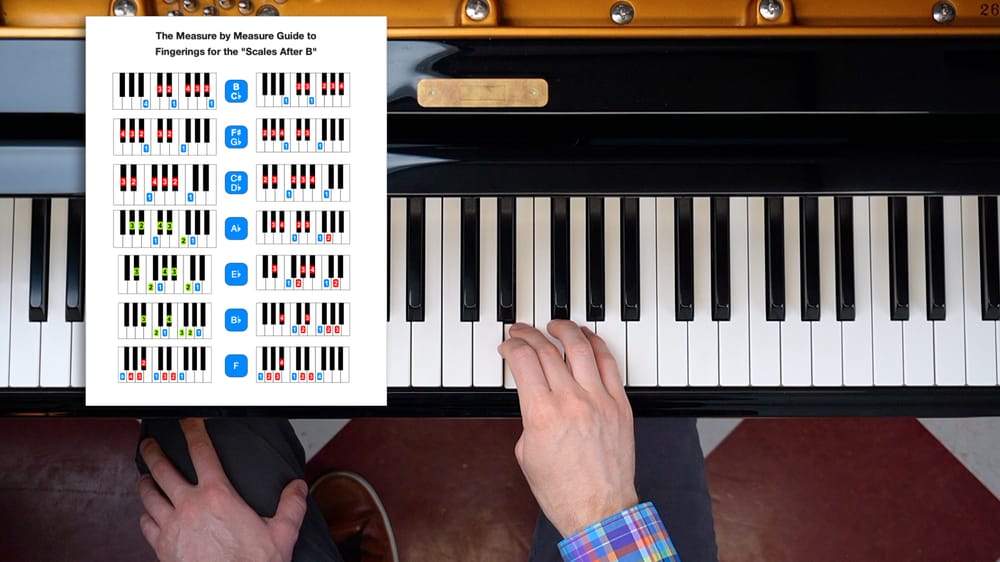
$100 ... FREE!
How to always remember scale fingerings
How to play fast, even, effortless scales
7 Levels of scales, from beginner to expert
I’m all about removing friction from your piano learning experience. If scales have you worried at all, I’ve broken them down into a simple Level-by-Level guide.
Let’s solve your scales the right way so that your free to learn more pieces!
MEASURE BY MEASURE
Membership Benefit No. 1
"The Repertoire Refinery"
Perfect Piano Pieces For Literacy, Skills, and Musicality
With your "Measure by Measure" membership, you'll have access to all my repertoire lessons, the special sheet music engravings (with bigger font and legible fingerings) and the phrase-by-phrase practice edition of each of the pieces.
Take the journey from beginner to late-intermediate playing with specially-selected pieces that highlight the most important piano skills for this part of your journey.
PLUS! ...
Membership Benefit No. 2
"Piano Reading Solutions"
Deep-Dives, Principles and Frameworks, Oh My!
Members get access to the Piano Reading Solution deep-dives, practice frameworks, sight reading secrets, and (for annual members) techniques courses. Whether your a total beginner, or you've been at this for a few years now, Measure by Measure will take you to the next level in your journey.
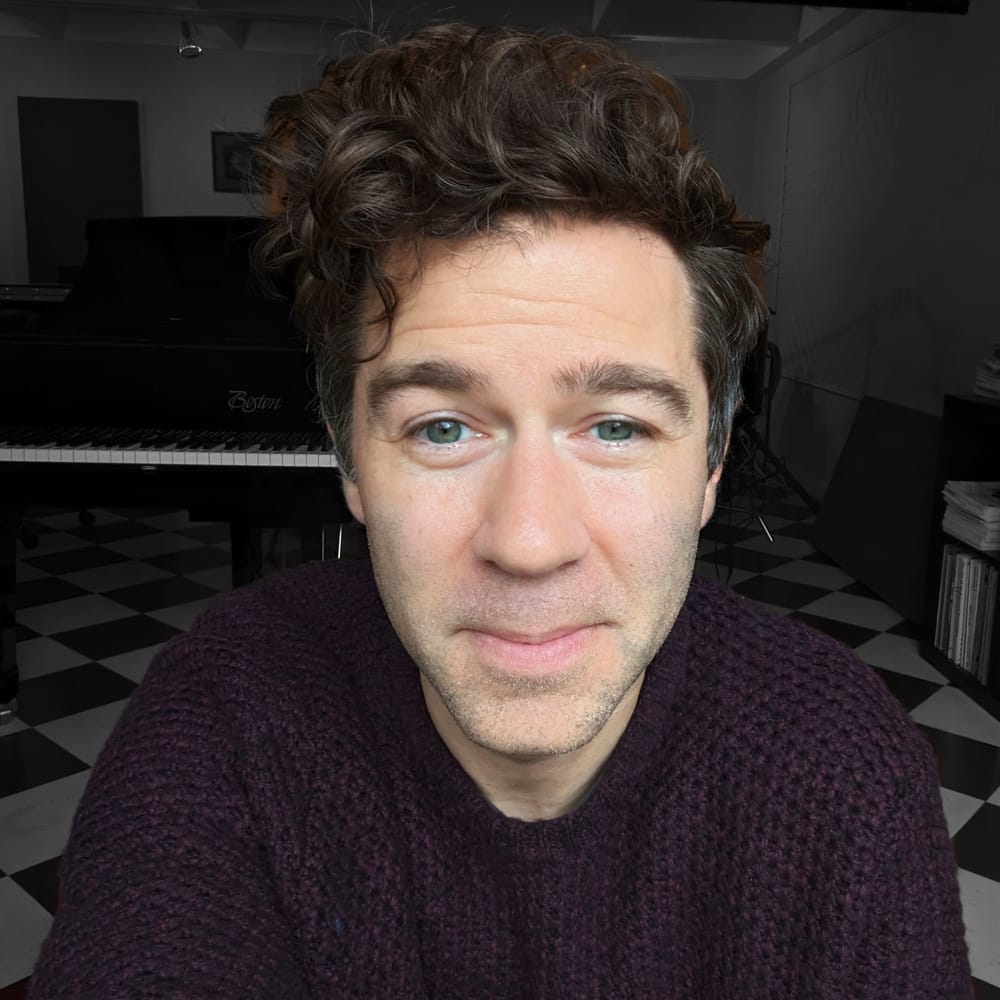
Hi! I'm Randy.
I'm a classical piano teacher with a Master's degree in Piano Performance. After about 20 years of teaching piano, I've discovered a love for the unique piano pieces by forgotten composers that suit beginning and intermediate piano players.
I love to play the masterworks too, but the problem with them is ... they're impossible for beginner and intermediate players.
I'm on a mission to restore music literacy to your education, to save you from the pitfalls of apps, rote-learning, and alternative notation gimmicks that won't serve you in the long-run.
Join me in Measure by Measure and discover ways to enjoy you practice learning real music and developing real skills.
Read More About Measure by Measure
"The Repertoire Refinery"
In this carefully curated library of repertoire, we'll go "Measure by Measure" through forgotten piano pieces that were composed specifically for people like you.
“It's like having a personal one-on-one lesson on specific pieces of music. Randy's approach has helped me to try music that I would not otherwise have tried, much less would I have found it on my own. It's all excellent and I think that I have found a great resource to promote my ongoing music practice and piano.”
- Ken H.
(member)
Studio-style repertoire training, minus the gimmicks
The Repertoire Refinery is piano unburdened of exercises. It’s a library of piano pieces taught in a way that feels like private lessons. You’ll master each measure just as you would with a studio teacher, without spending thousands on private lessons.
Not the same old "Greatest Hits" for piano
After teaching piano for nearly 20 years I’ve discovered the best area of music for absorbing piano skills. This area of piano music has been neglected (to the detriment of piano education) but it's such an awesome resource!
I'm referring to the forgotten music of the contemporaries of popular composers.
Roll Over Beethoven
Many composers lived in the shadows of the masters - Beethoven, Mozart, Chopin, and the other legends of classical music. Since they didn't receive the same kind of fame, they composed works for amateur piano players.
Their works were published specifically for people who were looking for great sheet music to play at home.
In many cases, the composers were just as talented, but less famous than the "wigged" composers you see busts of in school music rooms. They spoke the same musical language, and they often studied with the masters.
Composers like Thomas Attwood (Mozart’s student), Carl Reinecke (a protégé of Mendelssohn), Burgmuller, Gedike, Heller, Scharwenka and many many more!
They wrote miniature masterpieces, but they're more accessible to pianists who don't necessarily practice for hours a day. They require the same skills to play, but a fraction of the discipline and dedication.
Learn Like a Grown Up
“The biggest revelation was that I could start with real music that I wanted to play instead of starting with a method book that was designed for kids.”

- Kathy L.
(member)
Most beginning piano methods are intended for children. After a lifetime of learning, it feels infantilizing to work with materials intended (literally) for kindergarteners.
What every qualified piano teacher knows is that most of your learning happens in the repertoire. By choosing the right piece at the right time, you have music with depth and beauty that can take your learning deeper than any workbook, method book, or technique book ever could.
How I Choose the Pieces
I've scoured the collections of piano music to find music that suites beginner piano players in their journey to intermediate playing, and intermediate players making their journey to the masterworks. While I can't teach every conceivable piece, the pieces I choose for the program must satisfy each of these criteria:
- It's APPROACHABLE - it exploits just a few mechanics, and is not too hard
- It's CHUNKABLE - It can be learned “phrase by phrase” and “measure by measure”
- It BOOSTS LITERACY - it will challenge without being impossible to read.
- It's INTERESTING - it has beautifully, fun-to-play expressive parts
- It's CREATIVELY INSPIRING - There are creative ideas you can “steal” for your own improvising, songwriting and playful experimenting
Connect the Dots
If you’re serious about playing piano, not just learning a few familiar tunes, then this music is ideal for you, even if your goal is to play different music besides classical.
You can apply the principles and habits you observe from these lessons to the music of your choice.
Enroll now and experience real studio-style coaching—no gimmicks, just great music.
"Piano Reading Solutions"
Piano Journeys For Skills, Technique, and Literacy
Learn the magic principles at work in the repertoire head on. In the "Piano Reading Solutions" you'll find Frameworks, Principles and Deep-Dive lessons. These lessons allows you to tackle your next piano hurdle at your own pace so you can always work on what's most important and interesting to you at each stage.
“I've been playing piano for about 30 years and have had numerous teachers, online and in person. I was first taken by Randy's emphasis on score reading, which is unique in my experience. His approach is fun, engaging, and original. I can heartily recommend his program to any piano student from beginners to more advanced students.”

- Bill S.
(MEMBER)
Piano Reading Principles - From Beginner to Expert Mode
- How to read music the way professionals actually do it and not how children are taught. You will learn to read music without counting lines, recalling mnemonics, or starting every piece on middle-C.
- Comprehensive rhythm training will help you work out any rhythm you could possibly encounter in the annals of music history, forever and always 😀.
Sight Reading Secrets - Your Missing Link ⛓️💥
- Identify your unique musical strength (you have one and I'll help you uncover it)
- Unleash your spontaneous sight reading skills like never before
- Finally play confidently without even glancing at your hands
- Overcome your visual overwhelm and anxiety when looking at sheet music
- Learn the guiding principles for best-practice fingerings, on the fly
- Eliminate hesitations, hiccups and double-takes in your piano reading
Deliberate Practice Frameworks
The Piano Reader's favorite practice frameworks will transform your practice session.

- My number one motivation hack to stay consistent without stress
- The best tactics for efficiently polishing your pieces without thousands of repetitions
- Learn to play anything you want, as fast as you want, with finesse and style
- Absorb your music with easy steps, no matter how hard the music is
Annual Members - Save $54
Learning an instrument takes consistency and time. I know, not exactly "sales page" language, but it's true. I'm here for you on your journey for the long haul. Annual members save $54 (that's 2 months FREE), plus they receive access to the Techniques module, where we break down scales, arpeggios, broken chords, and more!
What's Inside
"Measure by Measure"
Frequently Asked Questions
Nope! It won't be too hard. We start with the basics, to make sure you're reading like a grown up (and not using childish tricks). The trainings is concise, comprehensive and practice-oriented.
The Repertoire Refinery is full of hidden gems especially for intermediate students. Yes - Measure by Measure is great for intermediate students, all the way to early-advanced students.
A few members supplement their Measure by Measure subscription with an in-person piano teacher. Most people are fully in the DIY mode and don’t have a piano teacher. I’ll give you lots of resources and lenses that will help you fill the roll of teacher for yourself, so you know when you're doing things right.
Like any program, you get out what you put in. Decide what consistent practice looks like for you. If that’s twice a week, that’s a great place to start! My "4-Measure Promise" is this: If you can sit down and learn 4 measures of music, twice a week to start, you’ll see tremendous progress.
I keep you engaged during the month as I roll out new content and repertoire for the course, but you can work through it at whatever pace feels comfortable. If you have a busy month, just pick up where you left off or start a new piece - it's very flexible.
It is self-paced. I'm here to point you in the right direction and answer questions whenever you need.
Any piano or keyboard will work. Any device will do.
Yes. You need some device to access to the content - your phone will work, but a tablet or computer with a bigger screen is ideal.
To keep Measure by Measure reasonably priced, it is a subscription model. To access any of the content you’ll need a current subscription. You will lose access to the content after the end of your last-paid month of membership once you cancel. See the Terms of Service for more details.
Yes. You can cancel any time. After you cancel you won't be charged again.
There is no free trial unless specified above. There is no money-back guarantee. Your month-to-month payments are nonrefundable, but you can cancel any time.
Yes. $270 per year saves you $54 and grants you access to the Technique module.
You can upgrade to annual at any time and it will prorate your current billing period towards the annual.
YouTube tutorials are almost always “learn by rote” experiences. They don’t foster your music literacy by requiring you to read.
You won’t find music like this on YouTube. The search-based “algorithm” means that YouTube pianists only teach the popular songs that everybody knows, regardless of whether or not those are actually good repertoire for the use of learning piano skills.
The Measure by Measure frameworks and principles that I reinforce with the unique repertoire are what set this apart from random YouTube lessons.
Mostly classical music.
You can apply the principles you learn to any other music. With this approach, you will see more carry-over than you can imagine.
I use classical music for a couple of reasons - one is to make sure that I comply with all copyright laws. Most programs illegally use copyrighted music without obtaining a license to use it.
My experience teaching piano for over 20 years also taught me that this music is the best venue for learning skills at the piano, regardless of your goals. If you want to play classical, jazz, pop, gospel, or anything in between, there is no disadvantage to learning classical music as your foundation, but huge disadvantages if you do not. It will only serve you in the long run.
Umm, yes! Like, that’s the whole thing.
Yes, there is a community feature to the program for asking questions and feedback opportunities. I consider the community a “perk”, not a core feature of the program. It’s there for us to use and I engage in it as best as I can, but it’s not required for your use of the program.
I answer every question that comes up in the community (give me a day or two), but I can’t guarantee that I’ll have time to personally answer every concern that comes up.
