Thanks for signing up for the Piano Reader Newsletter!
Your download is on its way to your inbox.
What follows is an invitation to join my online piano membership, Measure by Measure.
Sight Reading
Music Literacy
Community
Challenges
Repertoire
Theory
Own your Learning and Practice

Measure by Measure is for beginning & intermediate pianists who want to embrace sheet music, skip the method books, understand real piano skills, and practice like a grownup!
DOORS ARE CLOSED
Measure by measure accepts new students only a couple of times per year. Join the waitlist to be notified when doors open.
Deep-Dive Courses
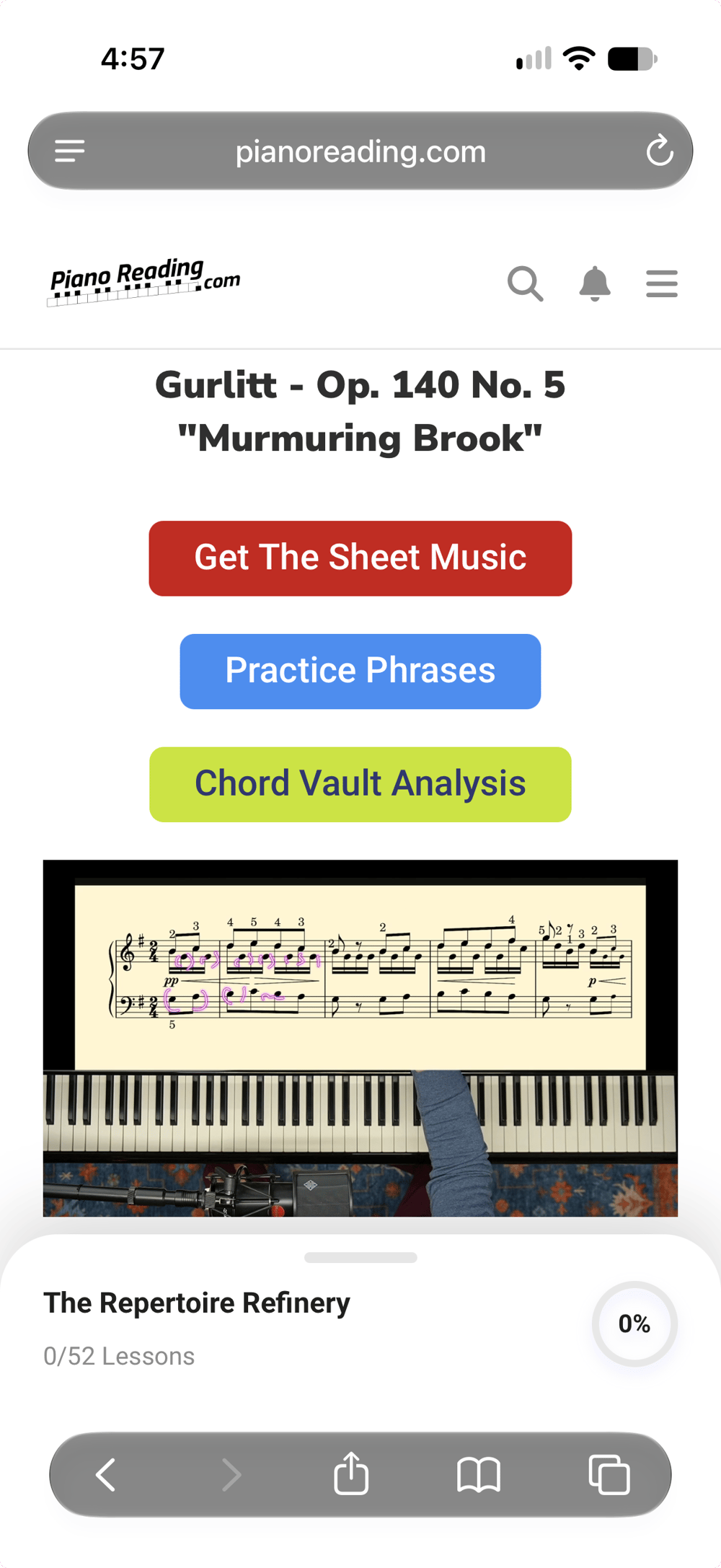
Repertoire Lessons
Challenge Modules
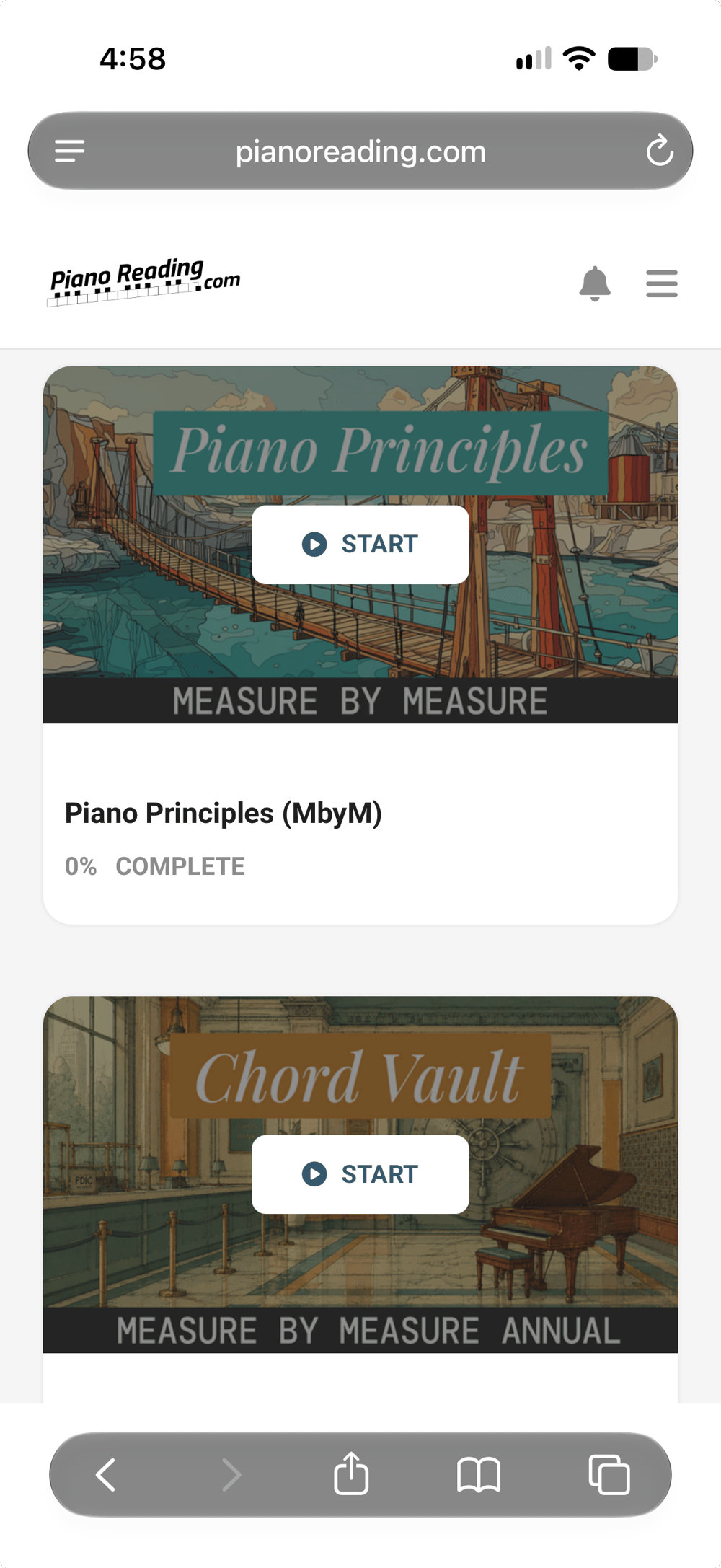
Community Energy

MEASURE BY MEASURE
MEMBER BENEFITS
Measure by Measure is perfect for you if you’re a beginner/early intermediate player and you want to play sheet music efficiently but you currently struggle with your literacy, technique, and knowing what or how to practice.
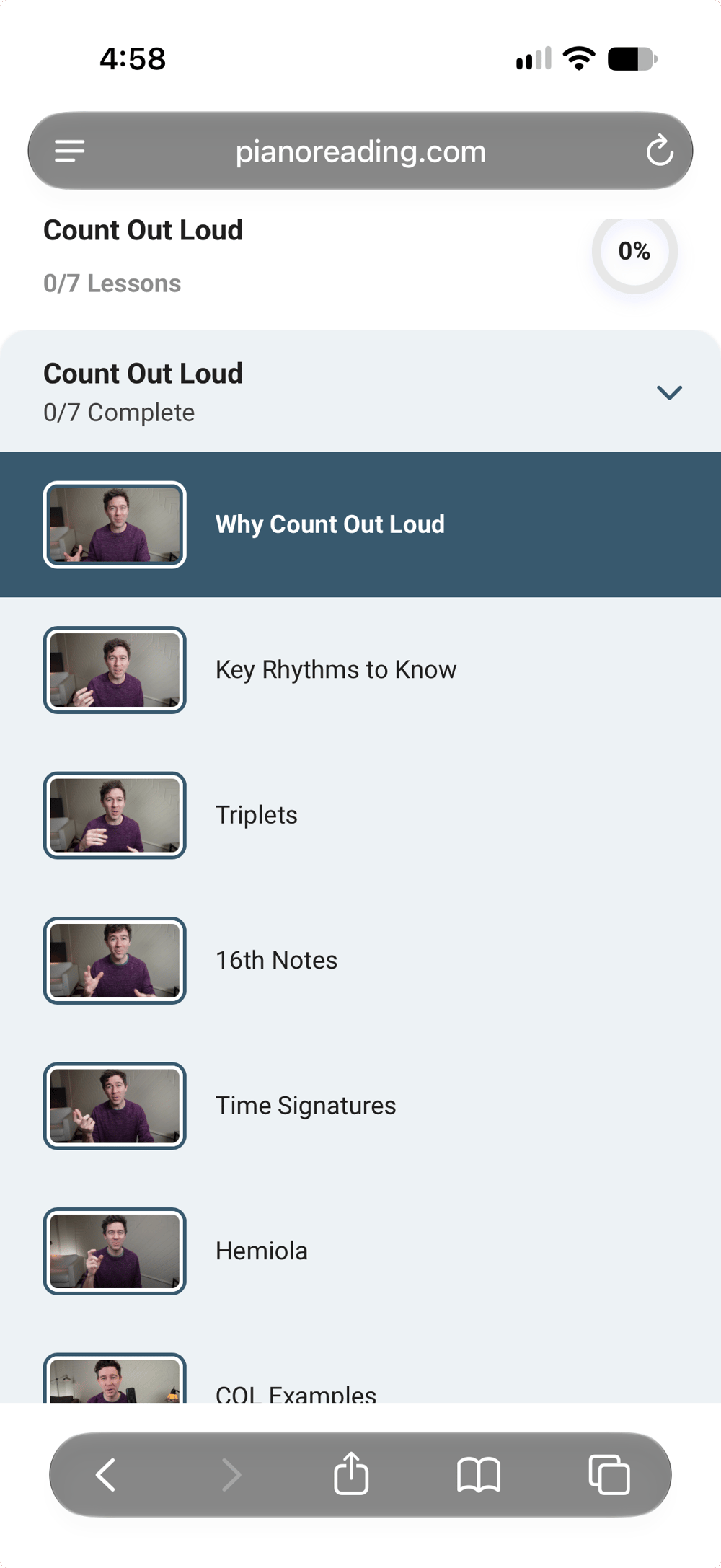
Challenge Modules
With timeline challenges, you’ll always know what’s next
The membership challenges transform casual, DIY beginner pianists into sheet-music masters, so you can play real piano repertoire with college-level expressive skills, understand music theory in context, and create with joy.
Overwhelm becomes a non-issue when you use the challenges to pull your next step from the course archive, take achievable steps, and build real habits.
Deep-Dive Courses
Deep-dives, principles, and frameworks
The Piano Reading Solutions are deep-dives, practice frameworks, sight reading secrets, and (for annual members) technique lessons.
Whether you’re a total beginner or you’ve been at this for a few years, the Piano Reading Solutions inside Measure by Measure will take your piano literacy to new heights with easy-to-apply principles that always work.
The Repertoire Refinery
Piano pieces that build music literacy and refine your skills
Take the journey from beginner to late-intermediate playing with specially selected pieces that highlight the most important piano skills for this part of your journey.
Every repertoire lesson comes with a special sheet music engraving (bigger font, legible fingerings) and a phrase-by-phrase practice edition, so you’ll know exactly how to break the piece up.
I teach every measure with video demonstrations, practice suggestions, and creative musicality.
Live Piano Reader Support
Community support and live calls
Join the Monday Mindset Meetup to get clear on your practice goals for the week. Monthly support sessions help us all get the most out of the current membership challenge.
Between calls, the member community is the place to ask questions, share wins, and take part in feedback opportunities. I read and answer every question (give me a day or two), so you’re never practicing in a vacuum.
Piano Reader Pillars
Every successful, literate pianist has these pillars in place:
01
Literacy Is Never A Disadvantage
Piano Readers know the value of reading sheet music and don’t try to skip it with some other “shortcut” method. Reading is never a disadvantage, whether you want to play classical, pop, or worship music. Chords and literacy are not mutually exclusive. And we don’t believe in dumb apps, rote-learning, YouTube "tutorials", AI slop, and alternative notation gimmicks that won't serve you in the long-run.
02
Practice Frameworks
Know exactly how to step into your practice day with techniques, tips, and tricks to get the most out of your time. The basic frameworks in Measure by Measure help you tackle new music every day, review with minimal effort, add knowledge, and layer expression to your pieces.
03
Repertoire-Based Practice
Your learning happens best when it’s situated in the context of actual music that you’re excited to play. Use the membership’s “Repertoire Refinery” to select a piece, or bring your own and apply the challenges and principles to your favorite piece.
04
Mechanics: Beyond Technique
Most people quite because of poor mechanics, not because they struggle with sheet music. They struggle with sheet music because of poor mechanics. It’s not just technique, it’s applied movements to music. These are the basic movements of piano playing that are doable, but tend to be cross-wired in adult learners.
05
Complete Musicianship
You don't have to choose between "playing by ear" and reading sheet music. The two don't have exist without each other. You can absolutely learn to play better by ear if you prefer reading, and you can learn to read music if you tend to play with chords, lead-sheets, and memorize things by ear.
06
Expression As Skill
Beyond just feeling the music, there are expressive techniques that elevate your playing. These skills make the difference between a great pianist and an average pianist, not the difficulty of piece they play. Learn to sound like a soulful and skilled pianist while tackling approachable music right at your level.
What You Get
When You Join
Measure
by
Measure
$750 Value
Sight Reading Secrets
If you are just starting out, Measure by Measure will help you learn to read music in a very unique and fast way.
For most learners who have already started, the Sight Reading Secrets principles will take your music literacy to new heights and speeds:
- Identify your unique musical strength (you have one and I'll help you uncover it)
- Unleash your spontaneous sight reading skills like never before
- Finally play confidently without even glancing at your hands
- Overcome your visual overwhelm and anxiety when looking at sheet music
$2,500 Value
Repertoire Refinery
In this carefully curated library of repertoire, we'll go "Measure by Measure" through forgotten piano pieces that were composed specifically for people like you.
- Works by Mozart, Bach, Gurlitt, and many other genius classical pianists.
- Undiscovered gems that were written specifically for home pianists during the golden age of sheet music publishing
- Teaching pieces in their purest form, written by the great-grandparents of all modern teachers.
$Priceless!
Membership Community
Seeing other learners in action and receiving encouragement for your peers is the single greatest motivator for an online community. We make our community feel easy-going, positive, and a little silly. Your learning take center-stage, and the no-pressure environment gives you plenty of challenges without feeling put on the spot.
$500 Value
Journey Challenges
Learn the frameworks for practice that make all the difference in your practice. If you can learn how to read music the way professionals actually do it and not how children are taught, you will read without counting lines, recalling mnemonics, or starting every piece on middle-C. Comprehensive rhythm training will help you work out any rhythm you could possibly encounter in the annals of music history, forever and always.
Over $5,000 Value!
Small call to action headline
What Members Are Saying
Every successful pianist has these pillars in place:
“I've been playing piano for about 30 years and have had numerous teachers, online and in person. I was first taken by Randy's emphasis on score reading, which is unique in my experience. His approach is fun, engaging, and original. I can heartily recommend his program to any piano student from beginners to more advanced students.”
- Beth S.
(MEMBER)

- Kathy L.
(member)
“The biggest revelation was that I could start with real music that I wanted to play instead of starting with a method book that was designed for kids.”
“It's like having a personal one-on-one lesson on specific pieces of music. Randy's approach has helped me to try music that I would not otherwise have tried, much less would I have found it on my own. It's all excellent and I think that I have found a great resource to promote my ongoing music practice and piano.”
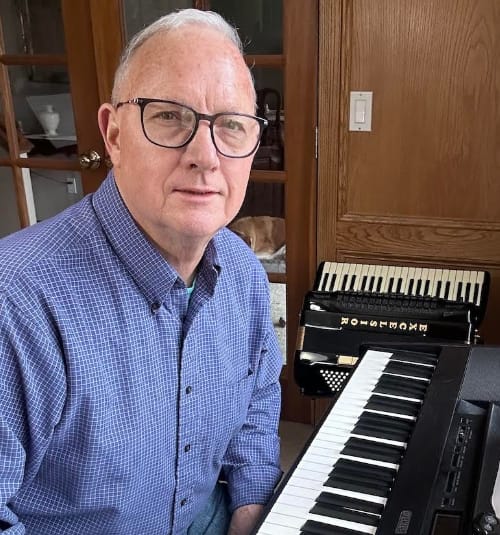
- Ken H.
(member)
Is Measure by Measure For You?
Measure by Measure is for you if:
You are starting piano, or you’re returning to piano. You may be a beginner, late beginner, or somewhere in the many intermediate levels of the piano.
You at least suspect that reading music is important. You may have struggled with it in the past, but you know if you can develop music literacy, you’ll have the most useful and efficient learning tool at your disposal.
You love classical music, even if you also love other music. It doesn’t need to be the only way you appreciate music, but you’re drawn to the beauty of classical piano.
You’re not necessarily trying to be a virtuoso. This program is intended for people who have a life outside of their practice You want to learn, but you recognize there are achievements an online program probably can’t provide.
You are not motivated out of guilt or a feeling that you “should” learn piano, but because you are drawn to it. You want to enjoy the practice process more deeply. Music is integral to your life and it effects your energy, self-esteem and your ability to be tuned into your intuition.
It's Probably NoT FOR YOU IF:
You don't want to read music. I’ll do everything I can to convince you that reading music is never a disadvantage, but some people just can’t be bothered.
If you think playing piano is just one hack away. My 10,000+ lessons as a professional teacher have taught me that it can't be rushed, but it can be optimized in smart ways. Learning piano isn't the result of hacks, apps, or tricks.
Your primary goal is to be a pop or jazz pianist. While I sometimes explore improvising as part of the teaching in Measure by Measure, it isn't the emphasis. However, if you're a jazz pianist who wants to improve your reading and technique, it's a great fit.
You have to be told exactly what to do. Measure by Measure is for grownup learners who take action and enjoy autonomy. It is not like the infantilizing "turn the page" method book series. While I teach many principles, systems, frameworks, and provide many checklists, examples and pointers, you are ultimately responsibility for your own practice and success.
Ready?
Let's make it so.
Join The Waitlist
Measure by Measure accepts new students only a couple of times per year. Join the waitlist to be notified when doors open.
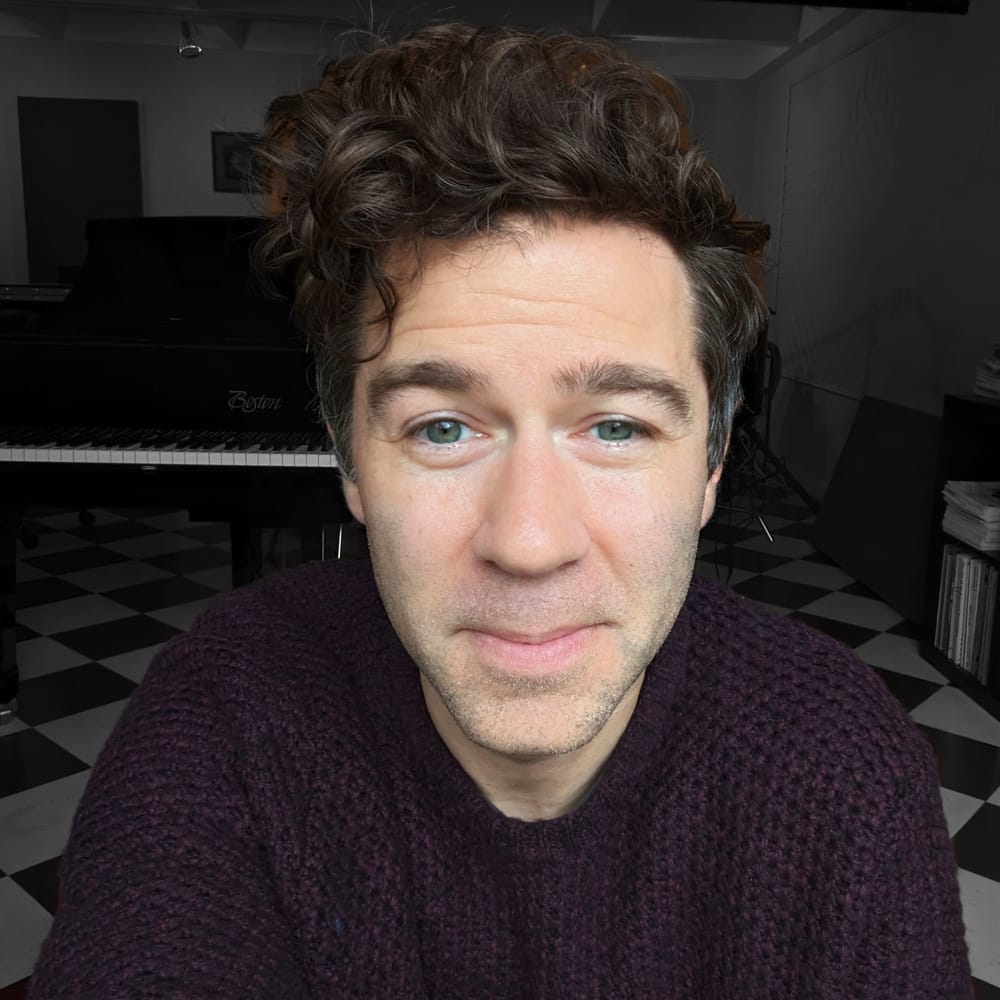
Hi! I'm Randy Peck, a classical piano teacher with a Master's degree in Piano Performance. 20 years of teaching piano taught me to love and appreciate the process. I discovered (through lots of trial and error) the best pieces that work for students. My favorite is teaching the bridge from beginning to late-intermediate repertoire that will prepare you well for the masterpieces.
My mission is to restore music literacy to your education, to save you from the pitfalls of dumb apps, rote-learning, YouTube "tutorials", AI slop, and alternative notation gimmicks that won't serve you in the long-run.
Join me in Measure by Measure and discover how to enjoy your practice while learning real music and developing lasting skills.
Where you invest your time and money is important
Frequently Asked Questions
In Measure by Measure, we start with the basics, to make sure you're confident reading music. The trainings is concise, comprehensive and practice-oriented. After that, your job is to apply the frameworks to all the music you learn. Lots of beginner-friendly music is in the library of lessons.
The Repertoire Refinery is full of hidden gems especially for intermediate students. Yes - Measure by Measure is great for intermediate students, all the way to early-advanced students.
You can use Measure by Measure all by itself, or use it to supplement your other studies with an in-person piano teacher. Most members do not have a private piano teacher.
Like any program, you get out what you put in. Decide what consistent practice looks like for you. If that’s twice a week, that’s a great place to start! I'll explain my "4-Measure Promise" that will help you make progress even if you don't have the most consistent practice.
It is self-paced. I'm here to point you in the right direction and answer questions whenever you need.
I'll keep you engaged as I roll out new content and repertoire for the membership, but you can work through it at whatever pace feels comfortable. If you have a busy month, just pick up where you left off or start a new piece - it's very flexible.
Any piano or keyboard will work.
I recommend viewing lessons on a tablet or laptop, but a phone or desktop can work too.
To access any of the content you’ll need a current subscription. You will lose access to the content after the end of your last-paid month of membership once you cancel. See the Terms of Service for more details.
Yes. You can cancel any time. After you cancel you won't be charged again.
I do not offer a free trial. I do everything I can to keep Measure-by-Measure as accessible as possible with a low monthly payment. If you're looking for a sample of my teaching, I provide a limited number of lessons on my YouTube channel and I invite you to watch there for a "vibe check".
Yes. $270 per year saves you $54 and grants you access to the Technique module.
You can upgrade to annual at any time and it will prorate your current billing period towards the annual.
YouTube tutorials are almost always “learn by rote” experiences. They don’t foster your music literacy by requiring you to read.
You won’t find music like this on YouTube. The search-based “algorithm” means that YouTube pianists only teach the popular songs that everybody knows, regardless of whether or not those are actually good repertoire for the use of learning piano skills.
The Measure by Measure frameworks and principles that I reinforce with the unique repertoire are what set this apart from random YouTube lessons.
Mostly classical music.
You can apply the principles you learn to any other music. With this approach, you will see more carry-over than you can imagine.
I use classical music for a couple of reasons - one is to make sure that I comply with all copyright laws. Most programs illegally use copyrighted music without obtaining a license to use it.
My experience teaching piano for over 20 years also taught me that this music is the best venue for learning skills at the piano, regardless of your goals. If you want to play classical, jazz, pop, gospel, or anything in between, there is no disadvantage to learning classical music as your foundation, but huge disadvantages if you do not. It will only serve you in the long run.
Umm, yes! Like, that’s the whole thing.
Yes, there is a community feature to the program for asking questions and feedback opportunities. I consider the community a “perk”, not a core feature of the program. It’s there for us to use and I engage in it as best as I can, but it’s not required for your use of the program.
I answer every question that comes up in the community (give me a day or two), but I can’t guarantee that I’ll have time to personally answer every concern that comes up.
©2026 STEARN LLC
15516 73rd PL NE, Kenmore WA, 98028