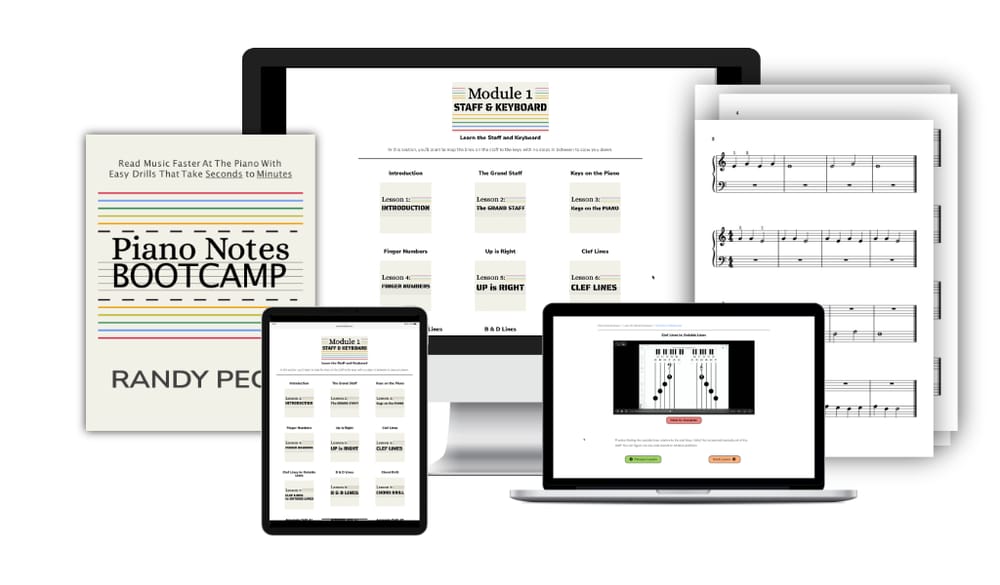
A BRAND NEW Course for Reading Music at the Piano
How To Connect The Music Staff INSTANTLY To The Keyboard
(Without Having To Think About It)
In As Little As A Weekend ...
Even If You Believe It's Too Hard To Learn To Read Music!
Watch This
YES! I Want To Learn Piano Now!
Give Me Instant Access To The "Piano Notes Bootcamp" PDF And Course
Does this sound like you?
You're a beginning piano player who dreams of someday becoming fluent at reading music.
Currently, you're focused on learning to read the notes. Ultimately, you want to play your favorite music on the piano.
And right now you would be ecstatic if you could play more than a few songs at the piano.
Unfortunately, you still have to figure out every note on the sheet music before you can move forward with a song and it takes you forever.
You're probably frustrated that it feels like reading music is an impossible language.
I know how that feels because I've been there myself...
In fact, I see every student I've worked with over the years struggle to answer this one question:
"Where is that note?"

If this sounds at all like you and your situation, then I'd like to invite you to check out...
Piano Notes Bootcamp
The Piano Notes Bootcamp PDF and video course makes it easy for you to connect the music staff INSTANTLY to the keyboard without spending years stumbling to find the notes on the keyboard.
Chances are you've also been told, even indoctrinated, that learning to read music is HARD.
In fact, when it comes to playing piano, you might even have the suspicion that formal piano teachers are secretly hoping you FAIL, just so you have to keep paying them every week.
And you might feel that online piano teachers don't even want to TRY to help you read music. Instead they only want to show you another approach that doesn't include READING MUSIC.
But you just want to be able to make sense of the sheet music and connect it to your hands on the keyboard (without having to think about so hard). Then you could play more of your favorite music and learn form that.
Oh, and the icing on the cake would be if you could see results in as little as a weekend!
You’re gonna LOVE this!
Here’s just a taste of what you get inside the Piano Notes Bootcamp PDF and video course…
- Your shortcut to learning to read music!
- Skip years of stumbling to find the notes on the piano
- Uncover how to read music like professionals do it - No experience required!
- Instantly find the keys on the piano ... even if you think you don't have good "eye-hand coordination".
- Uncover the resources at your fingertips to connect the music staff INSTANTLY to the keyboard.
- STOP stressing about reading music
Now you might be thinking ....
Who Is Randy Peck And Why Should I Listen To Him?
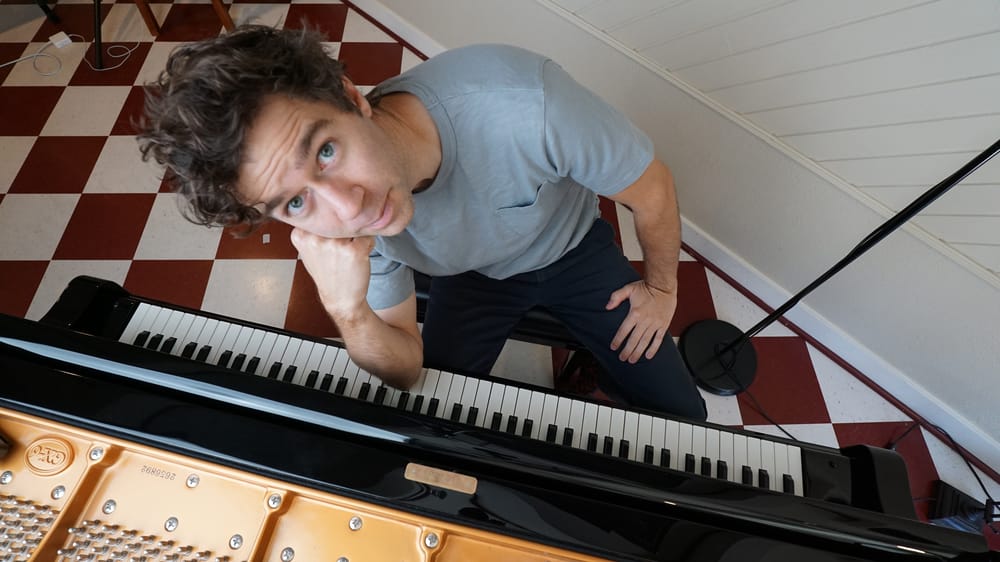
Hi! I'm Randy. I’m a pianist, songwriter, and a piano TEACHER.
I’ve taught hundreds of people how to play the piano, and I focus on music literacy and skill development, not just learning to play a song or two.
If you are just starting piano, and you have no idea where to begin …
Or you’ve tried to learn the piano, but you always struggled reading music …
You’re not alone. In my experience, the number one reason people give up on this journey is because they struggle to read music!
I used to teach note reading the old way, with mnemonics and "landmark" notes. Those methods have their merits, and there's no harm in learning those things. But I noticed they didn't translate into better reading in the long run.
Maybe you can relate to a student of mine:
Elizabeth was a beginning piano player. She had previously played the violin and she had read music all growing up. She had a good ear, great technique, but for some reason had a hard time connecting the notes on the staff to the keyboard, especially for the left hand.
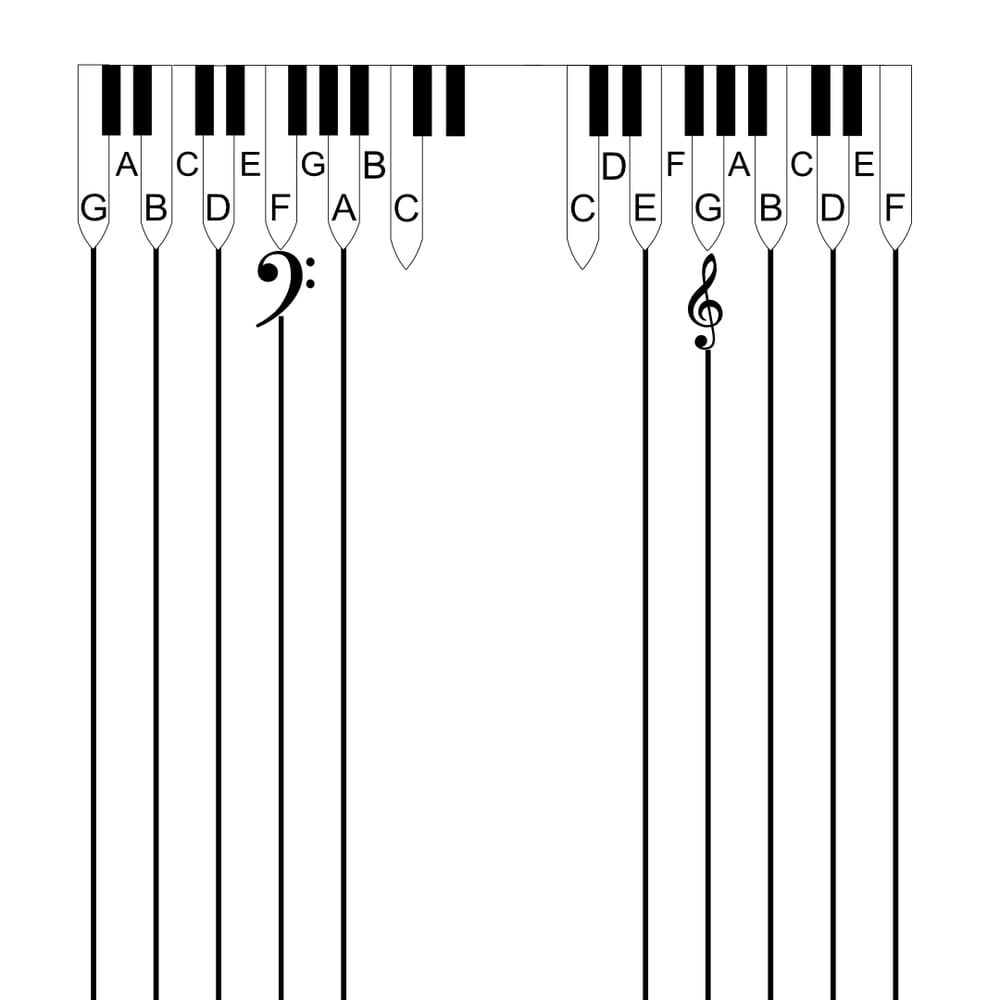
So at one lesson I showed her something a little unusual. I had a white board with a music staff. But instead of looking at the music horizontally, I turned it so the staff ran up and down. I then walked her through all the visual keys and anchor points on the staff and how they actually orient to the keyboard.
The lightbulb moment came by looking at it vertically.
The exact same staff, just turned 90-degrees vertical. After that one lesson her note reading dramatically improved.
From that moment I started teaching note reading differently.
It was a night-and-day change for all my new students. Over the next several months, I developed quick exercises that would help my students drill and remember where the visual anchor points were and how they map to the keys. Each drill took only minutes to learn and seconds to review.
It literally turns on the note-reading brain.
I’d love to share with you the vertical staff system that will give you your own “aha” moments at the piano and jumpstart your piano reading with Piano Notes Bootcamp.
“I’ve played piano for years, and I’ve never had anybody explain the music staff so clearly. It finally makes sense.”
~ Jaimme W.
“The lightbulb went off when I stopped trying to read middle-c and just learn the whole staff all at once like Randy was teaching.”
- Dave J.
“I could have been reading music so much easier this whole time had I known this from the beginning.”
- Kimberlee W.
Get the Piano Notes Bootcamp PDF ($37 Value)
- This 30-page ebook makes it easy to start practicing right away and shortcut the usual approach that takes years. I want you to reach your most ambitious goal for reading sheet music at the piano and this is the jumpstart!
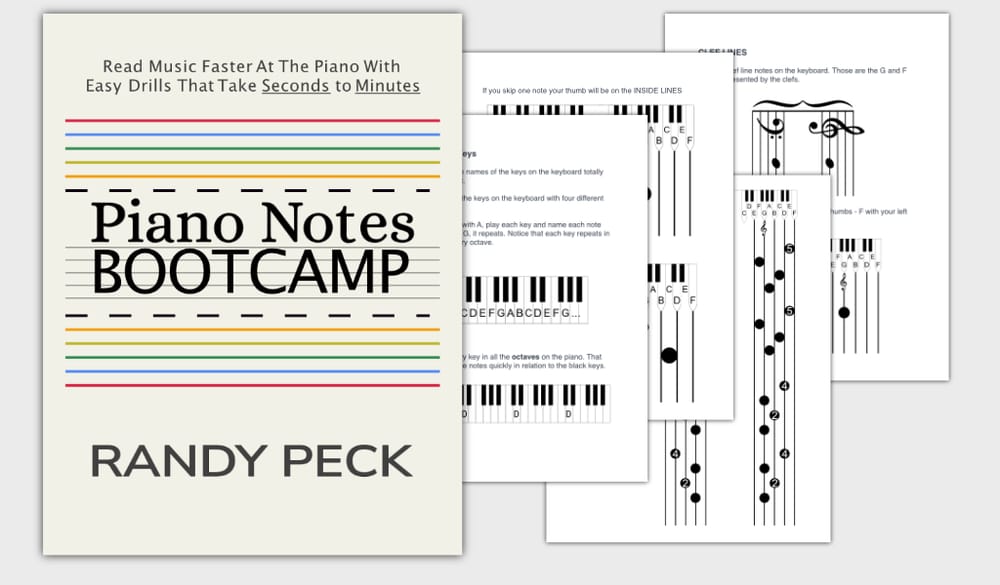
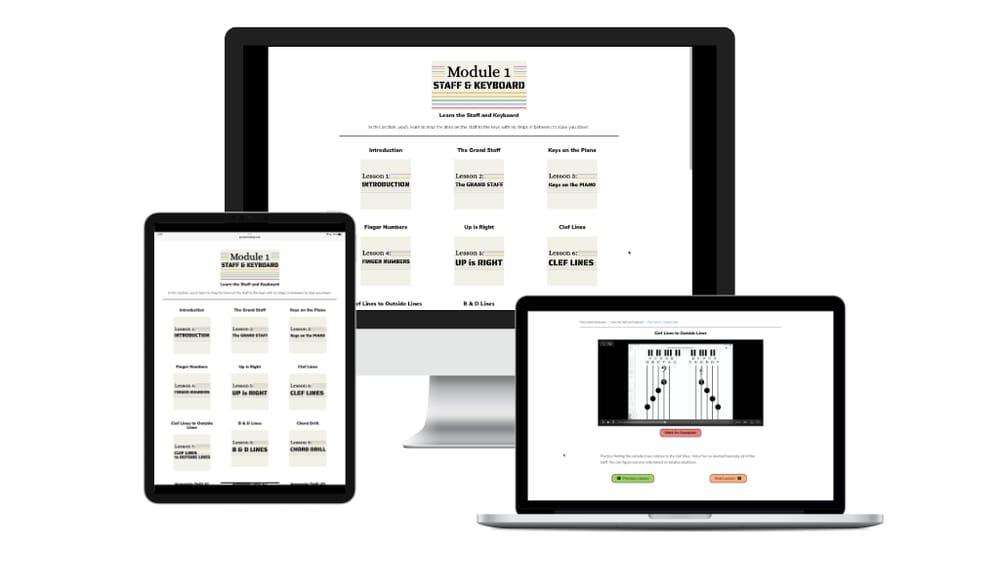
Piano Notes Bootcamp Video Course ($76 Value)
- In this video course I’ll walk through the PDF with you and demonstrate how to PLAY the exercises that will help you read and understand the keyboard and how it relates to the staff. I’ll also show you the hidden things about the music staff that even people who've played for years don't know. I’ll show you how to read both clefs with equal proficiency and learn it all up front so you don't have to worry about thinking about your notes ever again.
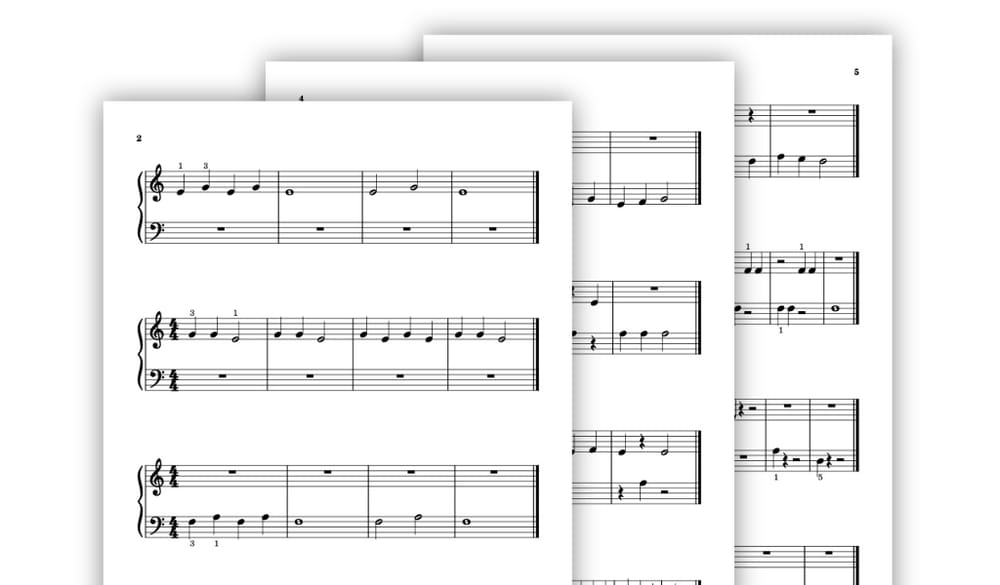
48 Sample Melodies
($15 Value)
- This packet of sample melodies makes it easy to put into practice the note playing you learned, drill the skills without needing to learn full songs, and then, you’re ready to go and read the music you want to read and you'll always know where to put your hands!
Total Value: $128.00
But today, you're getting all of this...
FOR ONLY: $37
30 Day Unconditional Money Back Guarantee
If the "Piano Notes Bootcamp" PDF And Course doesn't show you exactly how to identify the notes and map them to the keys ... if it doesn't pave the way for you to play piano like a professional long term... and if it fails to help you connect the music staff INSTANTLY to the keyboard (without having to think about it) without spending years stumbling to find the first notes on the piano... then I don't want your money. We'll give it all back - no questions asked - no hard feelings!
Here's Everything You Get Today
- Piano Notes Bootcamp Ebook (37 Value)
- Piano Notes Bootcamp Video Course (76 Value)
- 48 Sample Melodies (15 Value)